Table of Content
- Introduction
- Task Management System Overview
- Benefits in 2026
- Team Collaboration & Accountability
- Key Features
- Conclusion
- FAQs
Work in 2026 looks very different.
Teams are faster, more remote, More data-driven but many businesses still manage tasks through emails, spreadsheets, or WhatsApp. It works for a while then it doesn’t. Messages get missed, Updates come late, deadlines slip quietly to stay competitive businesses need structure not more effort. That’s why an Employee Task Management System is no longer optional It’s necessary.
What Is an Employee Task Management System?
Simply put, it’s where work lives
An Employee Task Management System helps assign, track, prioritize, and monitor tasks in real time. Managers see who’s doing what employees know what’s expected Deadlines are visible Progress is clear.
One dashboard. One source of truth.
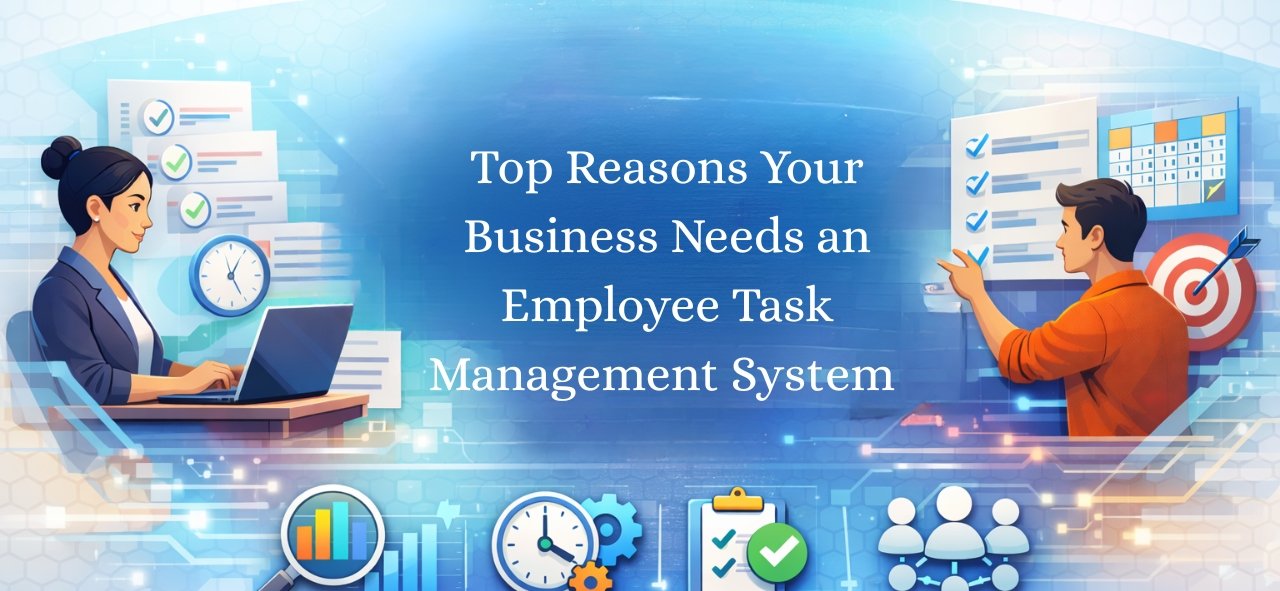
Top Reasons Your Business Needs One in 2026
1. Productivity & Efficiency Improve Naturally
Manual tracking wastes time, small delays add up. Task assignments, reminders, and updates get automated. Employees spend less time coordinating and more time doing actual work. Work moves faster. Output increases.
2. Team Collaboration Gets Easier
No more chasing updates across tools. Comments, files, and task updates stay in one place. Teams stay aligned, even across departments. Less noise. Better teamwork.
3. Real-Time Tracking Brings Transparency
You don’t need to ask for status anymore.
Managers see tasks as pending, in progress, or completed—instantly.
No guessing. No surprises. Deadlines stay under control.
4. Accountability Becomes Clear
Every task has an owner. A deadline. A priority. Employees know their responsibilities. Expectations are visible. Ownership improves, naturally.
Work quality gets better.
5. Smarter Decisions with Real Data
Over time, patterns appear.
Who’s overloaded. Which tasks slow projects. Where productivity drops.
Reports and dashboards make this clear. Decisions stop being assumptions.
6. Remote & Hybrid Work Feels Organized
In 2026, remote work isn’t a trend. It’s normal.
Cloud-based task management systems keep teams connected from anywhere. Work doesn’t stop because location changed. Productivity stays consistent.
7. Operational Costs Go Down
Delays reduce. Errors drop. Manual supervision reduces. Automation saves time. And time saves money.
Efficiency improves without adding pressure.
How It Helps Growing Businesses
Growth brings complexity, more people. More projects. More confusion. A task management system scales with the business. Multiple teams, workflows, and departments stay organized without chaos.
Growth feels manageable again.
Key Features to Look for in 2026
Simple task assignment and priorities.
Live progress tracking.
Clear performance reports.
Automated reminders.
Role-based access.
Cloud and mobile support.
Easy integrations with existing tools.
If it’s complicated, people won’t use it.
Conclusion
In 2026, success isn’t about working harder. It’s about working smarter. An Employee Task Management System brings clarity, accountability, and control to everyday work. It helps teams perform better and businesses scale confidently. Not a luxury anymore.
Recent Post
Genieten_van_winbeast_casino_no_deposit_voordelen_zonder_ingewikkelde_voorwaarde
Genieten van winbeast casino no deposit voordelen zonder ingewikkelde voorwaarden vandaag De Voordelen van een No Deposit Bonus bij Winbeast Casino Hoe Maak Je
Essentiel_betify_présente_lavenir_des_paris_sportifs_avec_des_analyses_fiables
Essentiel betify présente lavenir des paris sportifs avec des analyses fiables et des opportunités uniques L'Analyse Prédictive au Cœur de la Stratégie betify L'Importance
Качество_обслуживания_и_pinco_официальный_для
Качество обслуживания и pinco официальный для требовательных клиентов Гарантия качества и надежности от проверенного партнера Преимущества выбора проверенных каналов Поэтапный процесс выбора партнера Поддержка
Frequently Asked Questions
Almost all industries—including IT, marketing, manufacturing, HR, sales, and service-based businesses—benefit from task management systems.
Yes. Small businesses benefit the most by improving productivity and reducing management overhead.
Absolutely. Most modern systems are cloud-based and designed for remote and hybrid teams.
It reduces confusion, automates workflows, improves accountability, and saves time spent on follow-ups.
Yes, modern systems offer role-based access, data encryption, and secure cloud storage.